Miniature painting for beginners: the complete starter guide
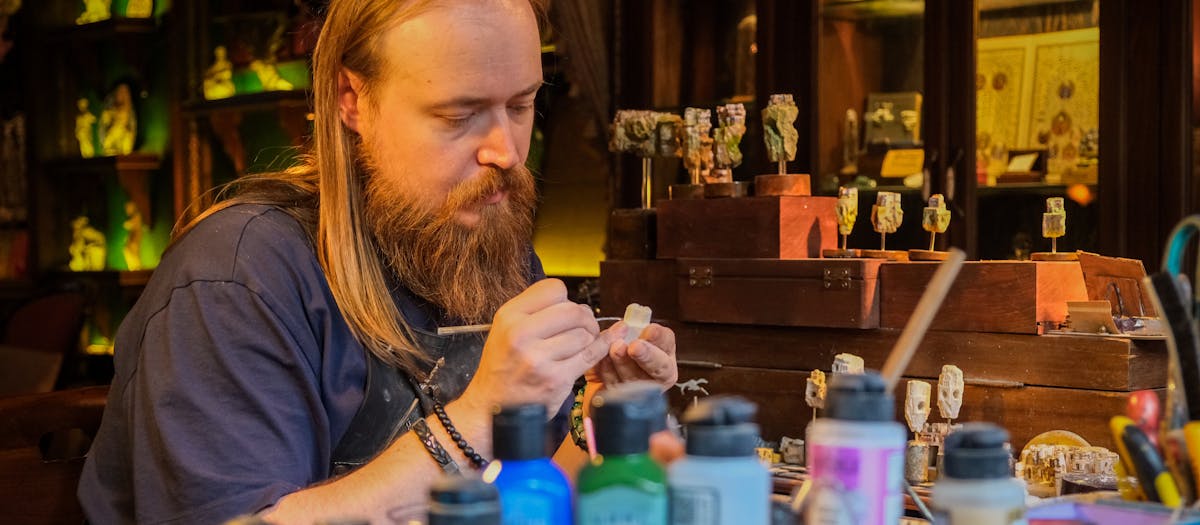
Painting miniatures is one of the most rewarding corners of the tabletop hobby, and it is far easier to start than the polished photos online make it look. You prime a model, thin your paint, build up a few thin coats, drop a wash into the recesses, and pick out the details — and a tabletop-standard mini is genuinely within reach on your first afternoon. This guide walks every beginner decision in the order that matters, from the small kit you actually need to the thinning habit that fixes most first-model problems.
A quick note on who this is for. It does not matter whether you paint fantasy or sci-fi minis, board-game pieces, 3D-printed models or historical figures — the materials and the technique are the same. Everything here is brand-neutral on purpose. Where it helps, picks are organised by spec — paint type, pigment, bristle, primer chemistry — so you can match the gear to your own models rather than to any one game.
One promise up front: no hype, and nothing called effortless. Every painter remembers their first wonky basecoat, and that is fine — paint more, agonise less. If you came for a specific question, jump to the section that applies from the cards throughout this page. If you are at the planning stage, read top to bottom.
The gear you actually need
The internet will try to sell you a wall of a hundred paint pots and an airbrush on day one. You do not need any of that to paint a good model. Here is the genuinely short list that gets a first miniature finished.
- Primer — a spray or brush-on undercoat that lets paint grip the model. Non-negotiable.
- A small set of paints — a dozen colours covers most of what a beginner paints, plus a dark wash and a metallic.
- Two or three brushes — a general size for basecoats, a smaller one for detail, and an old brush for drybrushing.
- A wet palette — keeps thinned paint usable for hours. A cheap ceramic plate works to start, but a wet palette is the upgrade most painters wish they bought sooner.
- Water pot and paper towel — for rinsing and for wiping the brush before you reload.
- Good light — a desk lamp you already own is fine; a daylight LED lamp is a later upgrade.
That is a first cart of roughly $40 to $90, depending on the set you choose. Everything beyond it — an airbrush, a magnifier, a hundred more colours — is an upgrade you add once you know the hobby has hooked you. Buy the small kit, paint a model, then decide what to add.
Paint types in plain English
Miniature paint is acrylic, which means it thins and cleans up with water and dries fast. But not all hobby acrylics do the same job. Knowing the four main types is the difference between reaching for the right pot and fighting the wrong one.
Standard acrylic — the workhorse
These are your everyday colours, built to be thinned and layered in two or three thin coats. You will use them for basecoats, layering and highlights. Hobby acrylics are ground finer than craft-store paint, so they sit in thin coats without burying the sculpted detail. This is the bulk of any paint set and the type you will reach for most.
Wash and shade — instant depth in the recesses
A wash (sometimes called a shade) is a thin, dark, free-flowing paint that runs into the cracks and recesses of a model and pools there, darkening the deep areas and leaving the raised areas lighter. One pass of a brown or black wash over a flat basecoat instantly makes a model look three-dimensional. It is the single fastest way to make a beginner mini look finished, and it is the step new painters most often skip.
One-coat high-pigment paint — speed in a pot
These heavily pigmented paints are designed to colour and shade in a single pass: they go on darker in the recesses and lighter on the raised areas as they settle, doing the job of a basecoat and a wash at once. They are slightly different to control than standard acrylics — they flow more — but for getting an army of models tabletop-ready quickly, they are hard to beat. Thin them less than a standard acrylic.
Metallic — steel, gold and bronze
Metallic paints carry tiny reflective flakes that give a genuine metal sheen. They behave a little differently to flat colours — the flakes settle, so stir well — and they look best over a dark basecoat. A silver, a gold and a bronze cover most blades, armour and trim a beginner paints.
Thinning paint — the number one beginner fix
If you read one section on this page, read this one. The single most common reason a beginner mini looks rough is paint applied too thick, straight from the pot. Thick paint floods the fine detail a sculptor worked hard to put in, dries with brush marks, and looks lumpy. The fix costs nothing: thin your paint.
The target everyone repeats is the consistency of milk. On your palette, pull a little paint to the side, add a small amount of water, and mix until it flows off the brush like milk rather than sitting like cream. It should be slightly translucent on the first pass — that is correct. You are not trying to cover in one coat.
A wet palette makes this far easier, because thinned paint dries out in minutes on a dry plate but stays workable for hours over a damp sponge. One-coat high-pigment paints need less thinning than standard acrylics, and washes come pre-thinned. But for everyday colours, milk is the rule — and once it clicks, your painting jumps a level.
Priming, in two minutes
Bare plastic, resin and metal are too slick for acrylic to grip, so unprimed paint rubs and chips off with handling. Primer solves two problems at once: it gives the surface a fine tooth so paint sticks, and it lays down an even base colour so your first coats look consistent rather than patchy.
You have two routes. Spray primer from a can or airbrush coats a model fast and evenly, but needs a still, well-ventilated space and a dry, mild day if you spray outdoors. Brush-on primer is slower but needs no special setup and is ideal for a single model or for touch-ups. Either way, the rule is the same as for paint: thin, even coats. A thick coat of primer fills detail just as badly as thick paint. A light grey or white primer is the easiest base for bright colours; black is quicker for dark schemes.
Colour choice matters more than beginners expect. Paint over a white primer and your colours stay bright; paint over black and everything reads darker and more shadowed. Many painters keep both and choose by the model.
Brush basics and brush care
You do not need an expensive brush to start, but you do need to look after the ones you have. A cheap brush cared for properly outlasts a premium one that is abused.
For a beginner kit, three brushes cover almost everything: a general-purpose brush around size 1 or 2 for basecoats and larger areas, a smaller detail brush around size 0 for eyes, buckles and fine lines, and an old, worn brush kept purely for drybrushing — a technique where you wipe most of the paint off onto a towel, then lightly drag the near-dry brush across raised detail to catch the edges. Drybrushing destroys a brush over time, so never use a good one for it.
Synthetic brushes are cheap, durable and perfectly good for learning. Natural sable holds a finer point and more paint, which experienced painters value for smooth blending, but it costs more and needs careful care. Start synthetic; treat yourself to a sable once your control has grown.
Your first palette and workspace
Where you mix your paint matters more than beginners expect. A dry palette — a ceramic tile, a plastic lid, an old plate — works to start, but thinned acrylic skins over and dries within minutes, so you waste paint and lose a colour mid-job. A wet palette sits a sheet of special paper over a damp sponge inside a sealed tray; the paint draws moisture up from below and stays workable for hours, sometimes overnight if the tray seals well.
For a workspace, you need surprisingly little: a flat surface you do not mind getting paint on, a water pot, a paper towel, decent light, and somewhere to stand your model so you are not gripping it constantly. A cheap painting handle or even a cork helps. Good light is the upgrade that helps most — a daylight-balanced lamp shows true colour and reduces eye strain on long sessions.
When an airbrush is worth it
An airbrush is not a beginner purchase, and you should not feel behind for hand-brushing. Where it earns its place is speed and smoothness at scale: priming and basecoating a whole batch of models in minutes with a flawless, even finish that is hard to match by hand. If you paint armies or print models faster than you can paint them, an airbrush changes the maths.
It adds cost (the airbrush plus a compressor), a cleaning routine after every session, and a real learning curve. And it always needs proper ventilation and a respirator — atomised paint is not something to breathe. Learn to thin paint and hand-brush first; add an airbrush when batch work starts to feel like a chore, not before.
The beginner mistakes worth skipping
None of these are hard to avoid once you know them. They are simply the patterns that show up again and again with newer painters.
- Painting straight from the pot. Thick paint hides detail and dries with brush marks. Thin to the consistency of milk.
- Skipping primer. Unprimed paint chips off. A thin, even coat of primer first, every time.
- One thick coat instead of two thin ones. Build colour up in layers; let each coat dry.
- Letting paint dry in the ferrule. Load only the front half of the brush and rinse often. This kills more brushes than anything else.
- Buying a hundred colours first. A dozen colours plus a wash and a metallic does more than a wall of pots you never touch.
- Chasing an airbrush before mastering a brush. Hand-brushing and thinning come first; the airbrush is an upgrade, not a shortcut around the basics.
Frequently asked questions
What do I actually need to start painting miniatures?
Less than the internet suggests. To paint your first model you need primer, a small handful of paints, two or three brushes, a wet palette or even a ceramic plate, a pot of water and a paper towel. That is it. Everything else — an airbrush, a daylight lamp, a hundred paint pots — is an upgrade you can add later once you know you enjoy the hobby.
What paint do I use on miniatures?
Acrylic paint made for models. Standard acrylics layer up in thin coats, washes and shades flow into recesses to add depth, one-coat high-pigment paints cover in a single pass, and metallics give you steel, gold and bronze. Avoid craft-store acrylics for fine detail — they are thicker and the pigment is coarser, which clogs detail. Hobby acrylics are formulated for small surfaces.
Why does my paint look thick and gloopy on the model?
Almost always because it has not been thinned. Paint straight from the pot is too thick for a miniature and hides the sculpted detail. Thin it on your palette with a little water until it flows like milk, then build up two or three thin coats. Thinning is the single biggest fix for beginner results, and it costs nothing.
Do I have to prime a miniature before painting?
Yes. Bare plastic, resin and metal are too smooth for acrylic to grip, so paint rubs and chips off. Primer gives the surface tooth so the paint sticks, and an even base colour so your first coats look consistent. A thin, even coat of spray or brush-on primer is one of the most important steps, and skipping it is a common beginner regret.
How do I keep my brushes from going bad?
Keep paint out of the ferrule — the metal band that holds the bristles. Load only the front half of the brush, never push paint up to the base, rinse often, and never leave a brush standing tip-down in water. Reshape the tip to a point after cleaning. A good brush looked after this way lasts far longer than a cheap one abused.
What is a wet palette and do I need one?
A wet palette is a sealed tray with a damp sponge under a sheet of special paper. It keeps thinned acrylic workable for hours instead of drying out in minutes, which saves paint and makes blending far easier. It is one of the cheapest upgrades with the biggest payoff, and most painters wish they had bought one sooner.
Is an airbrush worth it for a beginner?
Not on day one. An airbrush is brilliant for fast priming and smooth basecoats once you paint a lot of models, but it adds cost, cleaning and a learning curve, and it always needs proper ventilation and a respirator. Learn to hand-brush and thin paint first. Add an airbrush when batch-painting starts to feel slow, not before.
What are the most common beginner mistakes?
Painting straight from the pot without thinning; skipping primer; using one thick coat instead of two thin ones; letting paint dry in the ferrule of the brush; buying a hundred colours before learning to use ten; and chasing an airbrush before mastering a brush. None are hard to fix once you know them, and this guide covers each.
Where to go next
The four silos, each starting from a beginner-first hub.